



Losing most or all of your teeth changes how you eat, speak, and smile, and traditional dentures do not suit everyone.
For patients who want fixed teeth without a plate that slips, All-on-4 dental implants are one way to replace a full arch using four titanium implants.
This guide explains the treatment, how it differs from individual implants and dentures, who may be suitable, and the factors that affect a private quote.
What Are All-on-4 Dental Implants?
All-on-4 dental implants use four titanium implants to support a fixed full-arch bridge. Unlike a removable denture, the bridge stays in place rather than being taken out each night. Dental implants are titanium screws placed into the jaw to support a crown, bridge, or denture. A clinician plans the implant positions around the available bone and decides whether grafting is necessary. Cleaning under the bridge, brushing, and regular hygiene visits remain important.
How Do All-on-4 Dental Implants Work?
The treatment uses four implants to anchor a full set of teeth. In many All-on-4 treatment plans, clinicians angle the rear implants to make the best use of the available jawbone. The four implants then support a connected full-arch bridge. The clinician decides the final design and number of teeth for each patient.
The angled approach may make full-arch treatment possible for some people with reduced bone. It does not remove the need for a clinical assessment. A fixed All-on-4 bridge distributes biting forces across the arch. How it feels and performs depends on the treatment plan, healing, and ongoing care.
Note: The number four refers to the implants supporting the arch, not the number of teeth in the bridge.
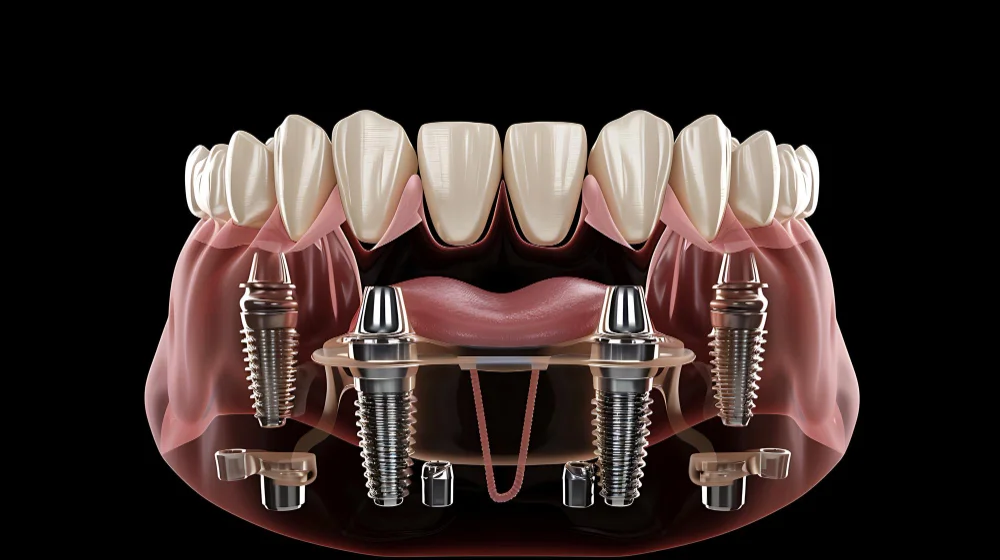
All-on-4 vs Traditional Implants & Dentures
The right option depends on the teeth missing, your gums and jawbone, and your priorities.
- Single dental implants: replace one or a few teeth; see our dental implants treatment page.
- Traditional dentures: removable teeth that rest on the gums.
- Implant-retained dentures: removable dentures that clip onto implants for cleaning.
- All-on-4: a fixed bridge supported by four implants for a full arch.
Who Qualifies for All-on-4 Dental Implants?
People missing a full arch may be candidates for All-on-4 treatment. This can also apply to people facing the loss of their remaining teeth. Suitability depends on general health, gum health, the available jawbone, and the clinician’s assessment.
Before recommending treatment, your dentist will check:
- Gum health, as active gum disease is treated first
- Bone volume and anatomy, assessed using the imaging your clinician considers appropriate for planning
- General health, since conditions such as uncontrolled diabetes affect healing
- Smoking, which can affect healing
Ask us about the implant training and experience relevant to your treatment.
Expert Tip: If bone loss may affect standard implant treatment, ask whether a full-arch implant assessment could suit you. Ask which alternatives are available too.
The All-on-4 Treatment Process: What to Expect
All-on-4 treatment takes place over a series of appointments, from assessment through to the final fixed bridge.
From consultation to your final teeth
Treatment begins with a consultation and imaging to plan implant placement. On surgery day, the clinician places the implants under agreed anaesthesia. Some plans include a temporary fixed bridge soon after surgery; others do not. After the implants heal and fuse with the bone, the clinician can fit the permanent bridge.
Expert Tip: Follow your clinician’s aftercare and dietary guidance during healing. Contact the practice promptly if you are concerned about pain, swelling, or the bridge.
How Long Do All-on-4 Implants Last?
With good care, All-on-4 dental implants can be a long-term solution. The implants and the bridge are separate components, and their lifespan varies with oral health, bite forces, materials, and maintenance. A systematic review in the Journal of Clinical and Experimental Dentistry reported high implant survival over the follow-up periods it examined; it should not be read as a personal outcome guarantee.
Daily brushing, cleaning under the bridge, and regular hygiene visits help protect the restoration and surrounding gums.
Discussing Full-Arch Implant Options With Us
Our dental implants treatment page explains that dental implants can replace missing teeth and that suitability depends on factors including the teeth missing and gum health. If you are considering fixed full-arch teeth, arrange a consultation with us to discuss which implant options are appropriate for your circumstances.
Helpful Tip: Bring a list of medications and relevant dental history to your consultation so the clinician can assess the options safely.
Frequently Asked Questions: All-on-4 Dental Implants
Below we answer common questions about all on 4 dental implants, how the treatment compares with other options, and what to expect.
What are All-on-4 dental implants?
All-on-4 uses four titanium implants to support a fixed full-arch bridge, unlike a removable denture.
How is All-on-4 different from individual implants?
Individual implants replace single teeth; All-on-4 uses four implants and one connected bridge to restore a full arch.
Is All-on-4 the same as implant dentures?
No. All-on-4 stays fixed; implant-retained dentures remain removable for cleaning.
Can All-on-4 implants be removed?
The bridge stays in place and is not designed for daily removal. A clinician may remove it for professional maintenance.
Who is suitable for All-on-4 implants?
People missing a full arch may be candidates, but no one can confirm suitability without an assessment. A clinician considers gum health, general health, and the available jawbone first.
How long do All-on-4 dental implants last?
They can be long-lasting with good care, but no fixed lifespan applies to every patient.
Is the All-on-4 procedure painful?
Your clinician will discuss the anaesthesia and pain-control options appropriate for your treatment. Some swelling and soreness can occur after implant surgery; the practice should explain what to expect and when to seek advice.
Do you get teeth the same day with All-on-4?
Some treatment plans include a temporary fixed bridge soon after surgery, while others do not. The clinician fits the permanent bridge after confirming appropriate healing.
All-on-4 Dental Implants: What to Remember
All-on-4 dental implants are a fixed full-arch option for people exploring alternatives to removable dentures. Four titanium implants support the bridge. A clinician makes individual decisions about suitability, treatment timing, and grafting.
For a detailed guide to the cost of All-on-4 treatment, read our All-on-4 dental implants cost guide.
What this means for you:
- Fixed, not removable: the bridge is designed to stay in place rather than be taken out daily
- Four implants per arch: one bridge supported by four implants
- Individual planning: the clinician assesses whether the available bone and gums support this approach
- Long-term care: cleaning and follow-up help protect both the implants and bridge
- Different from dentures: a separate option from removable implant-retained dentures
The best way to know whether it suits you is a proper assessment of your jaw, gums, overall health, and treatment goals, so a consultation is the natural first step toward fixed teeth.
Book an Implant Consultation at TruSmile in Essex
Considering fixed full-arch teeth? TruSmile in Basildon offers dental implants. Arrange an implant consultation to discuss which options are appropriate for your teeth, gums, and overall health.
Information Sources
Dental implant survival: systematic review (PMC).
Long-term dental implant survival analysis (PMC).
Dental implants in restorative dentistry (NHS, Cambridge University Hospitals).