


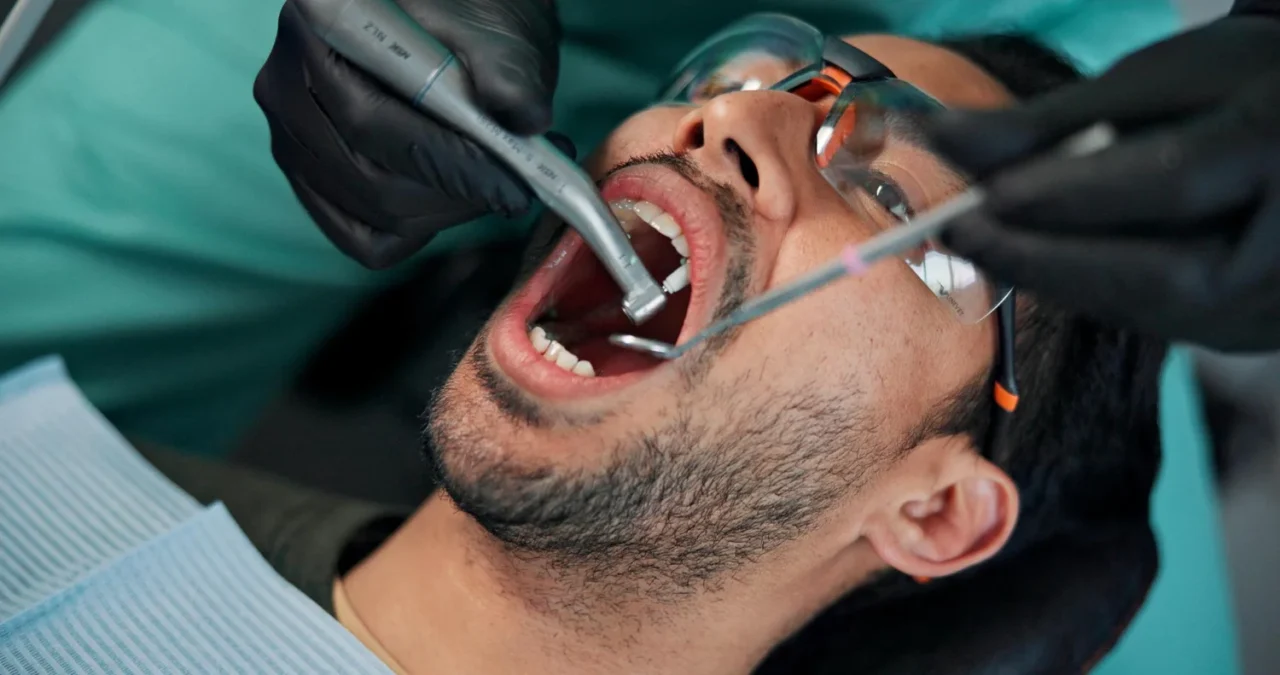
When you walk out of the dentist with a fresh filling, knowing when you can eat again saves a bitten cheek or a sore tooth.
The answer depends on the type of filling you had and whether you were given a local anaesthetic. Some fillings let you eat almost straight away, while others need a little patience to avoid damage or discomfort.
This guide explains how soon you can eat after white and amalgam fillings and why the wait matters. It also covers what to eat, what to avoid, and how to handle eating while your mouth is still numb.
How Long After a Tooth Filling Can You Eat?
How soon you can eat after a filling depends mainly on the material used. A filling repairs a tooth damaged by decay, and UK health guidance advises a filling once decay has left a hole in the tooth. With a modern white filling, the material is set hard under a curing light before you leave, so you can usually eat as soon as the numbness wears off. With an older amalgam filling, it is best to wait around 24 hours before chewing hard foods on that side. For a white filling, the bigger limit is the local anaesthetic rather than the filling itself, since a numb mouth is easy to bite by accident.
Can You Eat After You Get Fillings: The Reason for the Wait
The reason for waiting comes down to two things: how the filling sets and how your mouth feels afterwards. A white filling is cured instantly, but the tooth and the bite around it can stay tender for a day or two. Eating too soon on a sore tooth can be uncomfortable and may dislodge a softer material before it fully settles.
The second reason is the anaesthetic. While your lip, cheek, or tongue is numb, you cannot feel heat or pressure properly, so it is easy to burn or bite yourself without noticing.
Note: A white filling is ready before you are. With a white filling it is the numbness and tenderness, not the material, that decide how soon you can eat comfortably.
How Long After a Cavity Filling Can You Eat: White & Amalgam Differ
The type of filling changes the wait, which is why how soon you can eat after a cavity filling is not the same for everyone. The amalgam timings here apply if your new filling is a silver one.
Why Amalgam Needs the Extra Time
White composite fillings are hardened with a curing light during the appointment, so they reach full strength before you leave the chair. Amalgam (silver) fillings set more slowly and reach full hardness over the following hours.
- White (composite) fillings: set hard immediately, so you can eat once the numbness fades
- Amalgam (silver) fillings: wait around 24 hours before chewing hard foods on that side
- Either type: avoid very hot or very hard foods on the first day while the tooth settles
White fillings are widely used today, so the wait is usually just until sensation returns.
Can You Eat After a Filling?
Once the numbness has gone, soft foods are the safest choice for the first day. They let you eat normally without putting pressure on a tooth that may still feel tender. Whether you can eat comfortably after having fillings comes down to picking the right textures at first.
- Soup, yoghurt, and smoothies
- Mashed potato, scrambled eggs, and pasta
- Soft fruit, porridge, and well-cooked vegetables
Chew on the opposite side where you can, and return to your normal diet once the tooth feels settled. Drinks are generally fine straight away once the numbness has gone, though if the tooth is still sensitive, give a very hot tea or coffee a few minutes to cool. Within a day or two, you can usually ease back into your usual meals, adding firmer foods a little at a time.
Can You Eat After Having Fillings: The Things to Skip
For the first day or so, a few foods are worth skipping while the tooth calms down. Whether you can eat after a filling without trouble often depends on what you leave out at first.
- Hard foods like nuts, boiled sweets, and crusty bread
- Sticky foods such as toffee and chewing gum, which can pull at a new filling
- Very hot or very cold food and drink if the tooth feels sensitive
Expert Tip: Stick to lukewarm, soft food for the first 24 hours, as temperature extremes are a common trigger for short-term sensitivity after a filling.
If eating still hurts a week on, that is worth a quick check with a registered dentist rather than something to push through.
Eating After a Filling That Still Feels Numb or Tender
Eating while your mouth is still numb is the main thing to avoid. UK health guidance advises moving carefully until a local anaesthetic has fully worn off, because you may not notice if you injure yourself, and the same caution applies to chewing. Wait until full feeling returns, usually one to three hours, before eating. This matters most for children and for anyone who has had a larger filling. A numb lip or cheek is very easy to bite without realising until the feeling comes back.
Mild sensitivity to hot, cold, or pressure for a few days afterwards is normal and settles on its own. If the pain is sharp or lasts beyond a week, or your bite feels uneven, contact your dentist through the dental emergencies page, as the filling may need a small adjustment.
Expert Tip: If your bite feels high or uneven after the numbness fades, do not leave it, as a quick polish to level the filling usually fixes it in minutes.
Dental Fillings in Essex at TruSmile
You can have tooth-coloured fillings placed at TruSmile in Basildon, set hard during the appointment so eating afterwards is straightforward. Our dentists will explain aftercare for your specific filling, so you know exactly when and what to eat.
Helpful Tip: Book your filling for earlier in the day, so the anaesthetic wears off well before your next proper meal.
Frequently Asked Questions – Eating After a Filling
Most questions about eating after a filling are about timing, numbness, foods to avoid, pain, drinks and sensitivity.
Can you eat straight after a filling?
A white filling is hardened during the appointment, so you can eat as soon as the numbness has gone. With an amalgam filling, it is best to wait around 24 hours before chewing hard foods on that side.
How long after a white (composite) filling can you eat?
A white filling is cured hard before you leave, so you can eat as soon as the local anaesthetic wears off, usually one to three hours. Soft foods are kindest on the first day.
How long after an amalgam filling can you eat?
Amalgam sets more slowly, so wait about 24 hours before chewing hard foods on that side. You can eat soft food sooner, once the numbness has gone and the tooth feels comfortable.
Can you eat while your mouth is still numb?
It is best not to. A numb mouth cannot feel heat or pressure properly, so you can easily bite your cheek or tongue or burn yourself. Wait until full feeling returns first.
What foods should you avoid after a filling?
For the first day avoid hard foods like nuts and crusty bread, sticky foods like toffee, and very hot or cold items if the tooth feels sensitive. Soft, lukewarm food is the safest choice.
Why does my tooth hurt when I eat after a filling?
Mild tenderness to pressure or temperature for a few days is normal as the tooth settles. If the pain is sharp or lasts beyond a week, or the bite feels high, the filling may need a small adjustment.
Can you drink after a filling?
Yes, but avoid very hot drinks while your mouth is numb to prevent burns, and skip anything very cold if the tooth feels sensitive. Water at room temperature is fine straight away.
How long does filling sensitivity last when eating?
Short-term sensitivity usually settles within a few days. If it lasts beyond a week or worsens, have the filling checked, as it may need adjusting.
How Long After a Filling Can You Eat: What to Remember
How soon you can eat after a filling comes down to the material and the anaesthetic rather than a single fixed rule. White fillings let you eat once the numbness fades, while amalgam needs around a day before hard chewing. Soft foods are the safe choice for everyone on the first day.
What this means for you:
- White fillings: they set hard at the appointment, so eat once feeling returns
- Amalgam fillings: wait around 24 hours before chewing hard food on that side
- Never chew while numb: you can bite or burn yourself without feeling it
- Soft and lukewarm first: the gentlest choice while the tooth settles
- Lasting pain needs a check: sharp or ongoing discomfort means the filling may need adjusting
With a modern white filling, eating again is simply a matter of waiting for sensation to come back. Your dentist will confirm the right aftercare for your filling before you leave.
Book a Filling Consultation at TruSmile in Essex
If you need a filling or are unsure about discomfort after one, we place tooth-coloured fillings at our Basildon practice and will advise you on exactly when and what to eat afterwards. We offer finance options, including 0% finance, so you can pay for treatment in instalments; our team will explain them at your consultation. Arrange your consultation to get your tooth checked and treated comfortably.
Information Sources
Tooth decay (nhs.uk)
Local anaesthesia (nhs.uk)
The dental registers (GDC)